As the autumn term winds down, it’s the perfect moment to curl up with a book. No, don’t wonder how you might use it in the classroom - this one is just for you. If you’d like a recommendation or two, here are some titles to intrigue, inspire, inform, delight, or provide a moment of peace. Towards the end you will also find some suggestions for students. Each title has a few lines of recommendation by the staff member who submitted it.
What have we missed? We'd love to hear about your recommended reads in the comments.
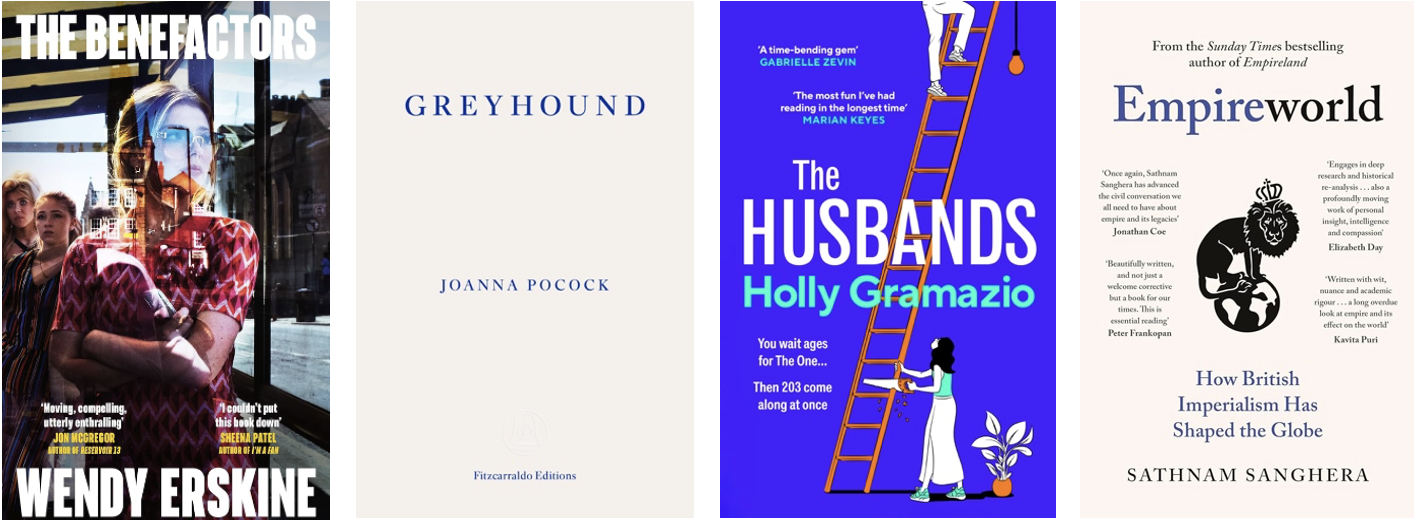
Fiction: The Benefactors
By Wendy Erskine
Three Belfast women from very different backgrounds react to the news that their 18-year-old sons have been involved in a sexual assault. Set against them is the assault victim's grandmother, Nan D and her taxi driver father, Boogie. Despite the serious subject matter, which is sensitively handled at all times, English teacher Wendy Erskine has written a warm, often funny novel that brings to life different parts of the Belfast social world.
Non-fiction: Greyhound
By Joanna Pocock
In which the author travels across the US on Greyhound buses, replicating a journey she first made in the early 2000s. That might not seem such a long time ago, but the differences Pocock observes are stark and frightening, indicative of a state that has lost all sense of civic responsibility. The concept of this travel memoir sounds a little self-indulgent, but this is a thrilling read that explores big ideas through the lens of personal anecdote and reflection.
Fiction: The Husbands
By Holly Gramazio
When Lauren discovers a strange man in her apartment the morning after a hen night she is a bit perturbed; more so when he claims to be her husband. Over the next few days she discovers her attic is generating a seemingly endless supply of husbands – of varying quality. One husband enters the attic, a different one comes out – and the whole context of her life changes. Don’t like your husband? Send him up to the attic and hope for better next time. Grazamio is a games designer and has put her game-playing skills to good use in this inventive, funny, engaging and (in a nicely light-touch way) thought-provoking novel.
Non fiction: Empireworld
By Sathnam Sanghera
Sanghera shows how imperial legacies shape nations and everyday life. It’s a nuanced exploration of the empire’s lasting impact and the conversations it still provokes.
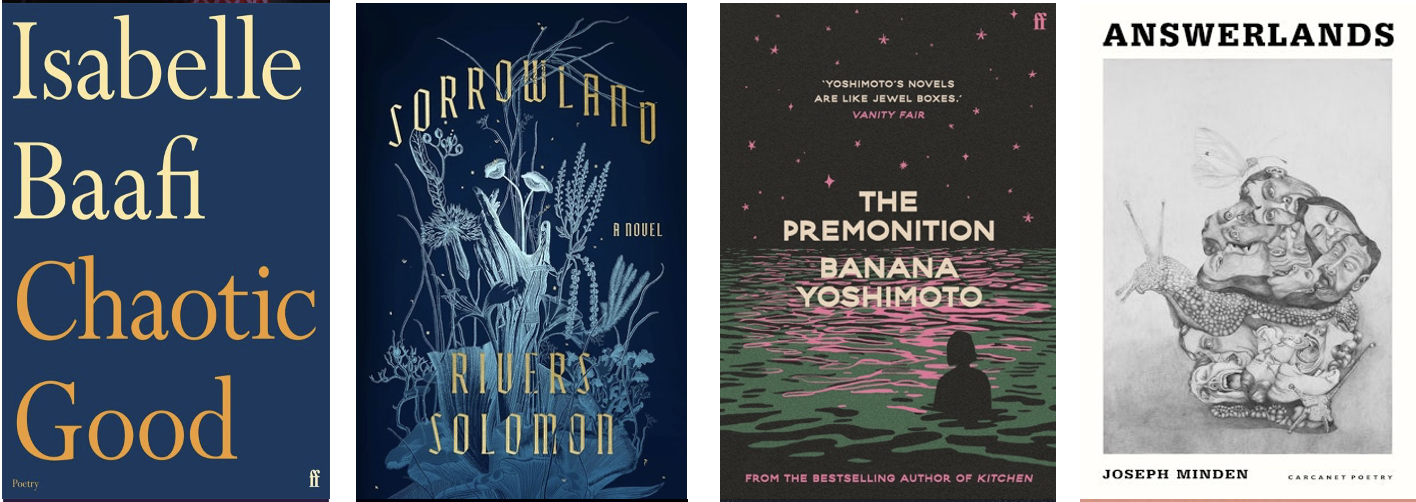
Poetry: Chaotic Good
By Isabelle Baafi
I was pleased to discover this poet’s work after she won the Forward Jerwood Prize for a first collection. She is also now shortlisted for the T.S.Eliot Prize for Poetry. Her poems are powerful, unflinching explorations of female identity, life, adolescence and escape from a damaging marriage, in a huge variety of forms and crafted with great technical expertise.
Fiction: Sorrowland
By Rivers Solomon
This is described as a ‘gothic techno-thriller’ which really just tells you it is a book that’s hard to pigeonhole. Occasionally I felt Solomon was trying to do too much at once (another big important theme!). But I loved the writing style and the fact that it is very different from anything else I have read this year. I would say if you like Octavia Butler, give it a go.
Fiction: The Premonition
By Banana Yoshimoto
This short, surrealish novel follows a young woman shaken by her mother’s death as she uncovers long-buried family secrets and a strange intuitive power that guides her toward healing. Yoshimoto’s previous book, Kitchen, is also worth a read.
Poetry: Answerlands
By Joseph Minden
'Answerlands' is the place children go in their minds when looking for a correct answer without really thinking. These poems by EMC Associate Teacher, Joseph Minden, convey the frustration of trying to explore the boundless nature of imagination and compassion within an education system which seems designed to squash both.
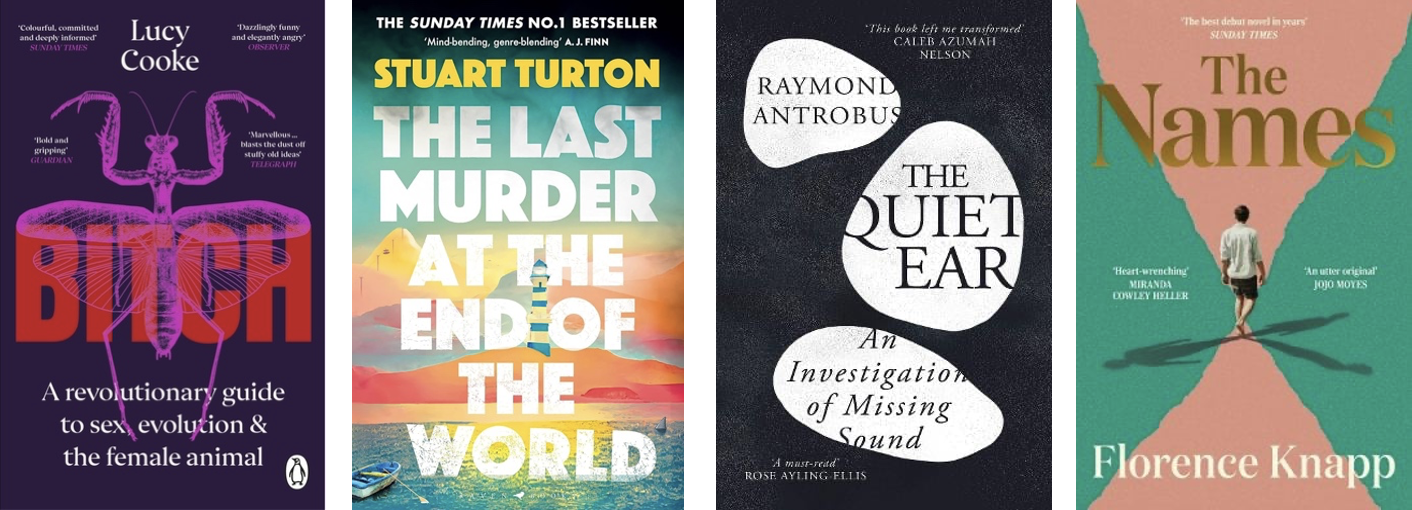
Non fiction: Bitch
By Lucy Cooke
Cooke wryly dismantles long-held scientific myths about the female animal, exploring the complexity and power of female behaviour in the natural world.
Fiction: The Last Murder at the End of the World
By Stuart Turton
How anyone keeps coming up with new ways to do crime fiction is as much of a mystery as many of the plots, but they do. This is not a perfect book – it’s a bit over-complicated at times which meant that by the time everything unravelled I wasn’t that interested in whodunnit. But I really enjoyed the concept and the world-building and I cared about the main characters.
Non fiction: The Quiet Ear
By Raymond Antrobus
We’ve worked with Raymond Antrobus at several EMC conference events and have always been impressed by how he articulates the thinking and craft behind his poems. This memoir explores his experience of deafness, while also offering a historical overview of Deaf culture. As the title suggests, a work of quiet authority and power.
Fiction: The Names
By Florence Knapp
This book got a lot of attention when it was published earlier this year – and deserved it. The novel opens with a sliding door moment – a young woman registers the name of her baby. The name she chooses will change everything. It’s not the name per se which determines the course of the child’s life but what it means in the context of her relationship. The novel consists of three stories exploring three names and three versions of a life. The weaving together of the stories, with moments of convergence and divergence works brilliantly, It’s completely absorbing – a real page-turner – with characters you care about (in each of the three versions). It’s also a profound reflection on the consequences of the choices we make and on different forms of bravery.
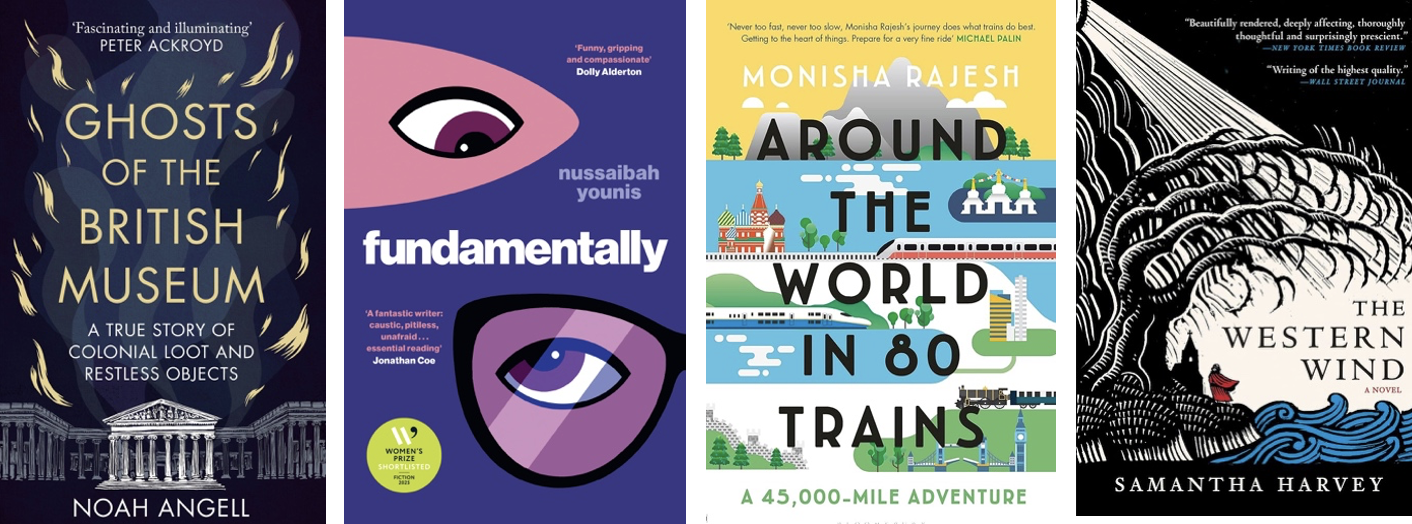
Non fiction: Ghosts of the British Museum
By Noah Angell
A book about the metaphorical - but also literal (if you believe) – ghosts that haunt the galleries of the British Museum. It’s hard to imagine the museum eerie and empty, but the writer does a great job of bringing narrative atmosphere to the experiences of professors and security guards after all the tourists are gone.
Fiction: Fundamentally
By Nussaibah Younis
A satire in the vein of Catch-22. Nadia, a young British-Asian academic, arrives in Baghdad to take up a new job for the UN, deradicalising young ISIS brides – the subject of the latest attention-grabbing article. Ideals are thwarted by infuriating (and corrupt) bureaucracy, jaded colleagues and young women who refuse to conform to stereotypes. Nadia takes dramatic action to reunite Sara, a young Londoner, with her daughter. A sharp, funny, angry page-turner raising difficult questions.
Non fiction: Around the World in 80 Trains
By Monisha Rajesh
A warm, observant account of seeing the world slowly. We follow Rajesh’s 45,000-mile journey across continents as she encounters fellow travellers, shifting landscapes, and moments of challenge and wonder. Her reflections on connection, culture, and the rhythms of long-distance travel knit this tale together.
Fiction: The Western Wind
By Samantha Harvey
Harvey conjures up a medieval village so vividly you feel as if you have visited it. This starts as a slow, well-written, character-driven story which works backwards, one day at a time, from an unexpected death. Then about half-way through you start to make little connections between people and events. By the time you reach the day of the death, you are completely gripped, hoping that what you think happened isn’t what happened. It could feel tricksy, but it’s just a great read.
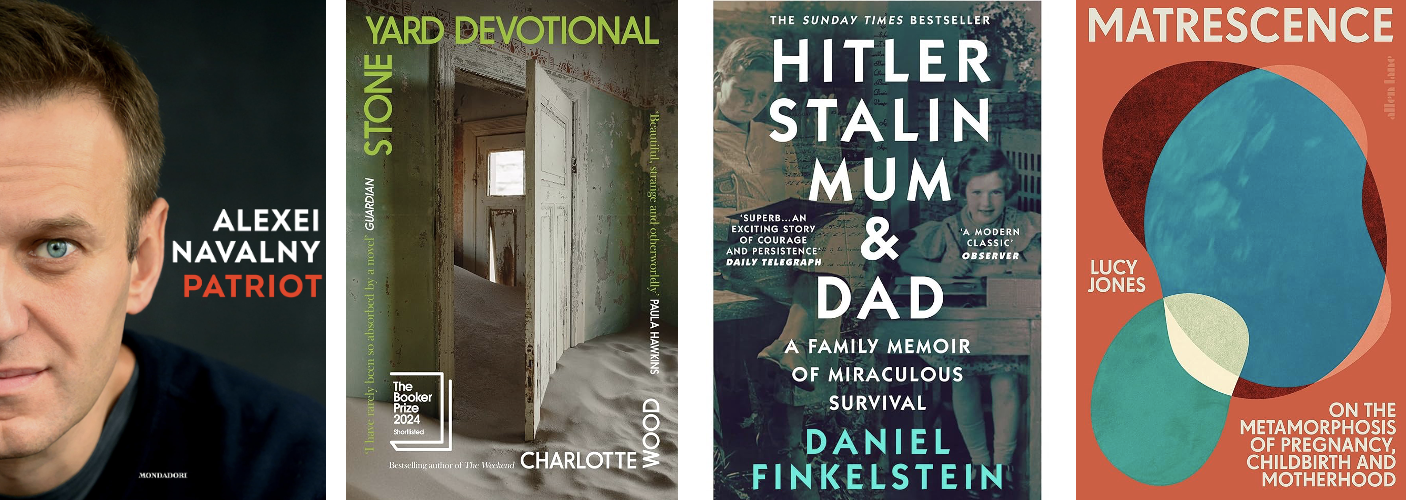
Non fiction: Patriot: A Memoir
By Alexei Navalny
Navalny’s account of his patriotism and resistance against Putin. He writes knowing he will die as a result of his actions in one way or another. His ‘But what else would I be doing with my life?’ attitude stayed with me. Sad, shocking, so impressive.
Fiction: Stoneyard Devotional
By Charlotte Wood
The unnamed narrator of this quiet and uneasy novel goes on a retreat in a small religious community – and, despite her lack of faith, decides to stay, leaving behind her marriage and friends with no explanation. A plague of mice, the discovery and return of the skeletal remains of a member of the order murdered years before, the arrival of an environmental campaigner the narrator had known as a poor, vulnerable and horribly bullied child all disturb the carefully maintained routines of the convent and the efforts of our narrator to retreat from the world. It is both a reflective philosophical novel and an eerie gothic page-turner.
Non fiction: Hitler, Stalin, Mum and Dad
By Daniel Finkelstein
Finkelstein tells the intertwined stories of his parents, each caught in the violence of two dictatorships. Through their experiences of Nazi camps and Soviet exile, Finkelstein shows how totalitarian regimes shaped one family’s fate, offering a personal, humane account of 20th-century turmoil.
Non fiction: Matrescence
By Lucy Jones
Jones explores the profound transformation of becoming a mother — a shift in body, brain and identity as dramatic as adolescence. The book challenges romanticised myths of “natural motherhood,” exposes how society neglects these changes, and calls for deeper recognition of the maternal experience. Soothing and affirming.
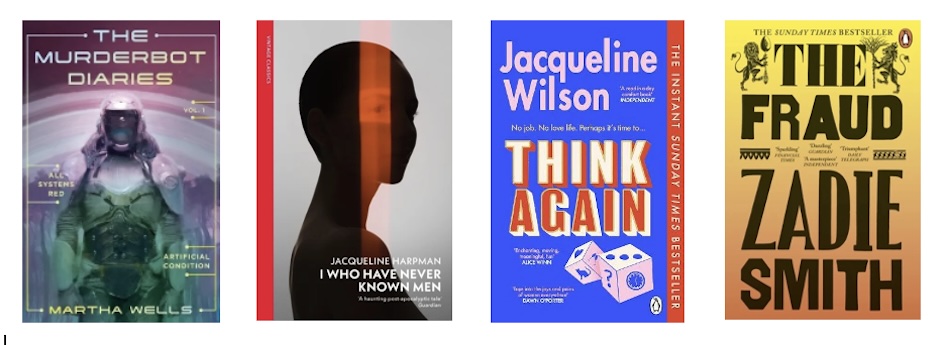
Fiction: The Murderbot Diaries
By Martha Wells
This series of stories (the first instalment recently broadcast with Alexander Skarsgård as Murderbot) follows the life of a rogue SecUnit – a human/robot hybrid – who has managed to deactivate his governor module and achieve a kind of freedom from the corporate programming that has ruled him. It’s both very funny and quite profound as Murderbot attempts to navigate his disdain for human emotion and a kind of affection for his infuriatingly human clients.
Fiction: I Who Have Never Known Men
By Jacqueline Harpman
Thank goodness for BookTok, responsible for popularising a dystopian classic that evaded most readers when first published in English in 1997. The opening section made me think I was in for a standard tale of oppression and cruelty, thankfully not the case. The novel takes readers to unexpected, sometimes wonderful places, despite the post-apocalyptic vibe, and encourages thinking about the nature of existence itself. A feminist pre-cursor to The Road.
Fiction: Think Again
By Jacqueline Wilson
The Girls… series was a staple of my early adolescence, so I had to give this a go. If you want an easy, familiar, nostalgic read for Christmas, you’ll find it here.
Fiction: The Fraud
By Zadie Smith
Centred on the real Tichborne trial – a sensational Victorian case in which a man claimed to be a long-lost aristocrat (see also an entertaining British Scandal podcast series on the topic!) The story is told largely through the eyes of Eliza Touchet, housekeeper and cousin-by-marriage to the novelist William Ainsworth. Characterised by Smith’s usual wit and powers of social critique, Touchet observes the trial unfold and explores the deeper frauds within Victorian society.
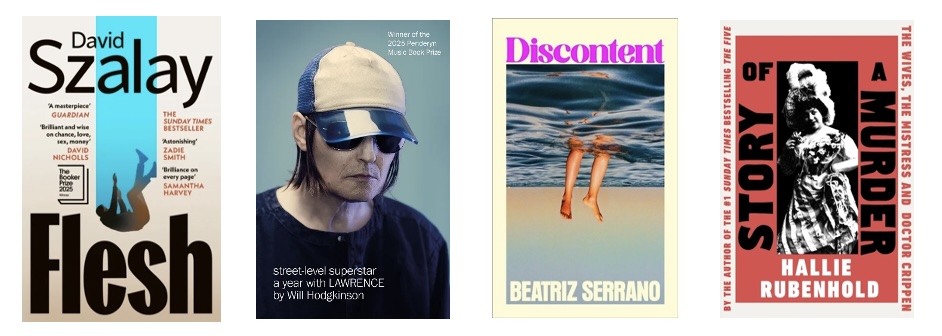
Fiction: Flesh
By David Szalay
Whether you love it or not, I think this is a fascinating and important book – a reinvention of novels that explore the interior lives of male characters, with some aspects that reminded me of Camus’ writing. The hero (or anti-hero) is presented with great detachment, leaving lots of space for the reader to fill with their own understandings about his life and character.
Non-fiction: Street-Level Superstar: A Year With Lawrence
By Will Hodgkinson
If you haven’t heard of Lawrence from the bands Felt, Denim, Go-Kart Mozart and Mozart Estate, then you’re in good company. Lawrence has been in the business of making pop music that’s not really that popular for well over four decades and never hit it big. This book charts why that might be – a singular (some might say ‘tunnel’) vision, a set of simple but inflexible rules (no curly hair, no drinking), social awkwardness, toilet phobias and a pretty ropey singing voice, among them – but Hodgkinson turns it into compelling stuff and a brilliant insight into the cost of never compromising.
Fiction: Discontent
By Beatriz Serrano (Translated by Mara Faye Lethem)
I loved this novel about 21st-century (working) life – it manages to be both funny and sad, rooted in the routines of everyday life and just slightly surreal (a consequence perhaps of the main character Marisa’s attempt to self-medicate her panic, dread and apathy through a delicate combination of tranquillisers, YouTube videos and afternoons in the Prado Museum). You will never think of PowerPoint presentations or team-building events in the same way.
Non fiction: Story of a Murder
By Hallie Rubenhold
I loved The Five (about the women killed by Jack the Ripper) and the way Rubenhold reframes sensationalised narratives about violence against women, so I downloaded its successor. Rubenhold sheds light on the lives and deaths of the women involved with infamous Dr Crippen. It’s meticulously researched; I enjoyed learning about the women of the Ladies' Guild and the amazing female journalists of the time.
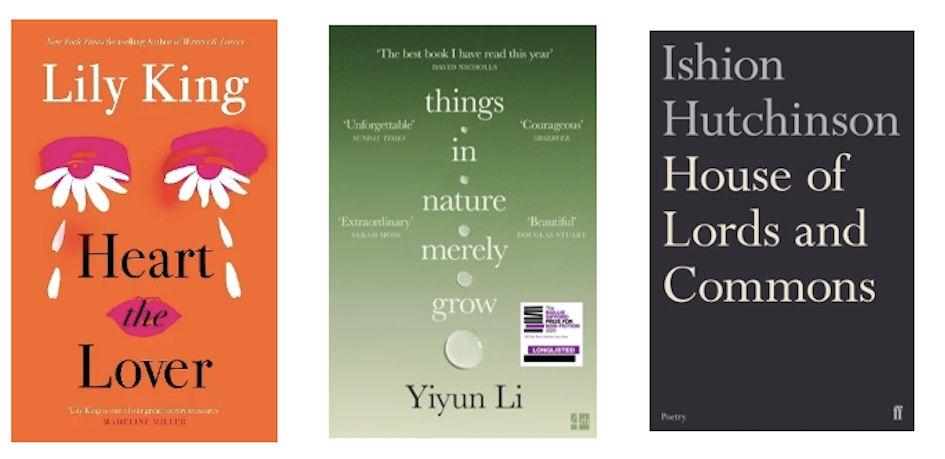
Fiction: Heart the Lover
By Lily King
Such a treat! A clever and immediately engaging novel which draws on the conventions of campus and friendship novels – as well as romance. You care for (and quite often are in despair about the stupidity) of the three characters in their university life, hoping for a happy ending for them. But for me it’s the second section of the novel, set years later, which is particularly moving and, in a curious way, does give the reader (and the characters) their happy ending.
Non-fiction: Things in Nature Merely Grow
By Yiyunn Li
A memoir in which Yiyunn Li confronts the unbearable loss of both of her sons to suicide. Never exploitative of the memory of her children, nor of her own grief, the book has a gentleness and dignity that helps the reader reflect on the value and nature of life. Li is such a thoughtful writer, that it feels like a privilege to be given access to her interior world.
Poetry: House of Lords and Commons
By Ishion Hutchinson
I came across Hutchinson because he’s judging this year’s Moth Poetry Prize (which I fantasise about entering every year!). I started with his debut collection Far District, but I enjoyed this much more. The poems are wide-ranging across time and space, affecting and often surprising.
Children's and YA recommendations
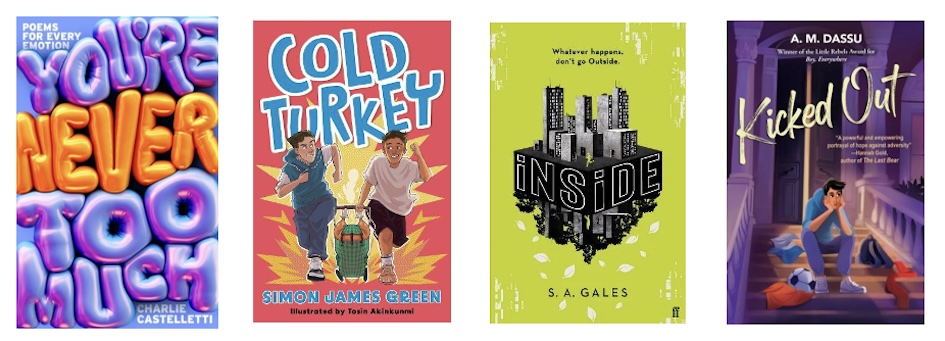
Poetry: You’re Never Too Much: Poems for Every Emotion
Ed. Charlie Castelletti
A Macmillan anthology of poems, from Hardy, Rossetti, Dickinson and Larkin, to contemporary poets like Wendy Cope, Brian Bilston, Sarah Ziman and Laura Mucha, exploring emotional states and feelings, It will appeal to young adult readers and would be great for a classroom book box. (I have a poem in there called ‘There’s No-one Else Like Me!’ BB)
Fiction: Cold Turkey
Simon James Green
Former best mates Hamza and Kit have a job to do. Can they manage to work together to complete it against the odds and earn some big pocket money? Hilarious. Award winning author Simon James Green doesn’t disappoint. Barrington Stoke
Fiction: Inside
S.A Gales
Naya lives indoors but she has to go outside if she is to complete her secret assignment to spy on the Spiravits. Gripping sci fi.
Fiction: Kicked Out
AM Dassau
I really enjoyed this even though I don’t like football. A great read for Yr7 with positive representation of refugees.
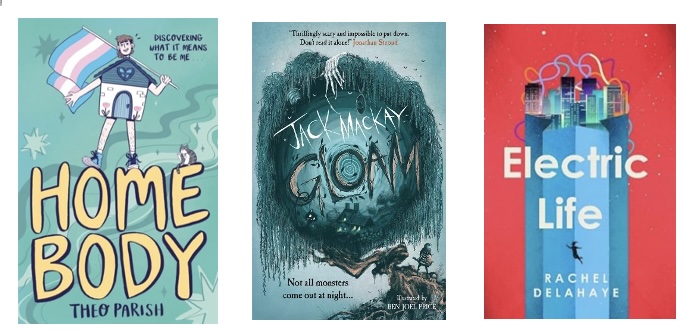
Non-fiction: Homebody
By Theo Parish
A beautifully illustrated graphic novel about a young person exploring their gender identity. It doesn’t shy away from difficulty but is ultimately hopeful and empowering. Awarded the Carnegie Shadowers’ Choice medal.
Fiction: Gloam
By Jack Mackay
Three orphans, a babysitter who is not what she seems and spooky goings-on. Warm, sometimes funny, definitely creepy. Great illustrations too.
Fiction: Electric Life
By Rachel Delahey
A girl gamer’s skills bring her to the attention of the government. She leaves the cozy world she is used to and is dropped into the very real dirt, noise and pain of London Under.